


Posted in Heraldry
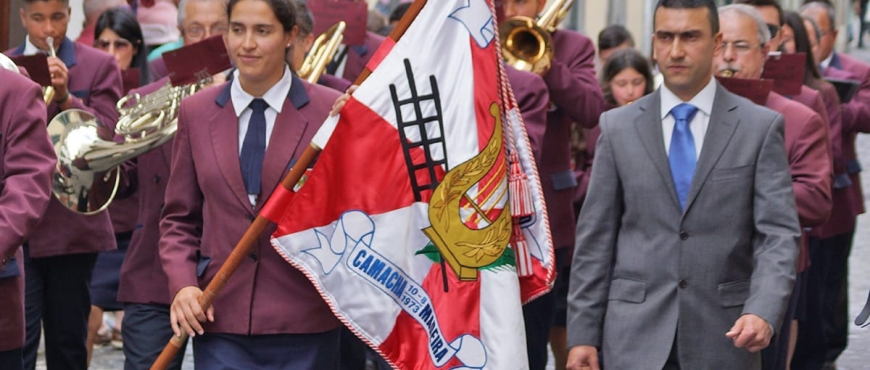
Flag – Banda Paroquial de São Lourenço da Camacha
The banner / flag takes the pictorial figure of the emblem, in square format, and is arranged in spear rod, silver metal, with acorn chain.
The banner / flag takes the pictorial figure of the emblem, in square format, and is arranged in spear rod, silver metal, with acorn chain.
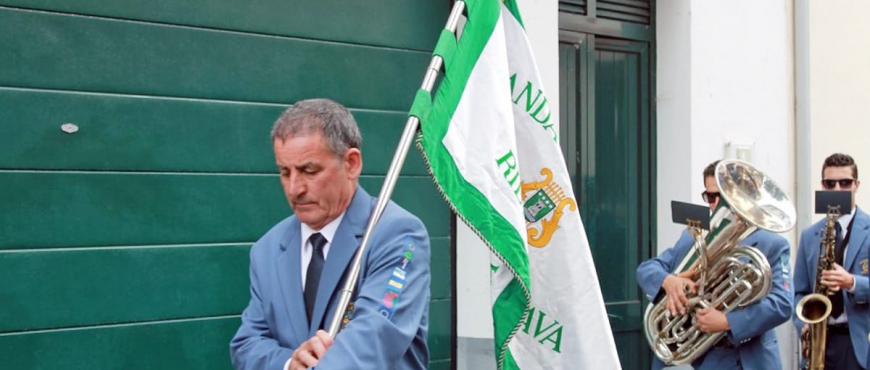
The flag of the Banda Municipal da Ribeira Brava is composed of white fabric with green margin and green and gold string, with golden ribbons. In the center of the flag is the emblem of the Banda Municipal da Ribeira Brava with inscriptions in green, in ellipse: at the top “BANDA MUNICIPAL” and in base, “RIBEIRA BRAVA”; the banner is safe by spear rod of silver metal.
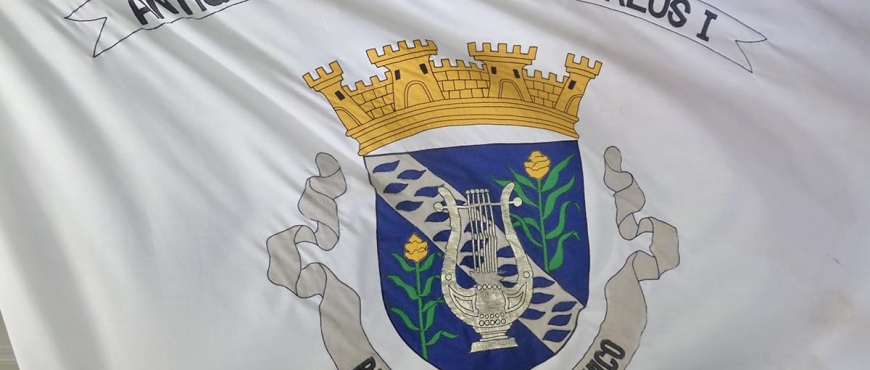
The flag of the Banda Municipal de Machico, white background with golden chain, with acorns, take in the center the emblem of the institution described above, be juxtaposed gray list with legend in black “Antiga Filarmónica D. Carlos I” above and in the base, with gold embroidery, the inscription “FUNDADA EM 1 DE NOVEMBRO DE 1896”; rests under a silver metal rod, lance.
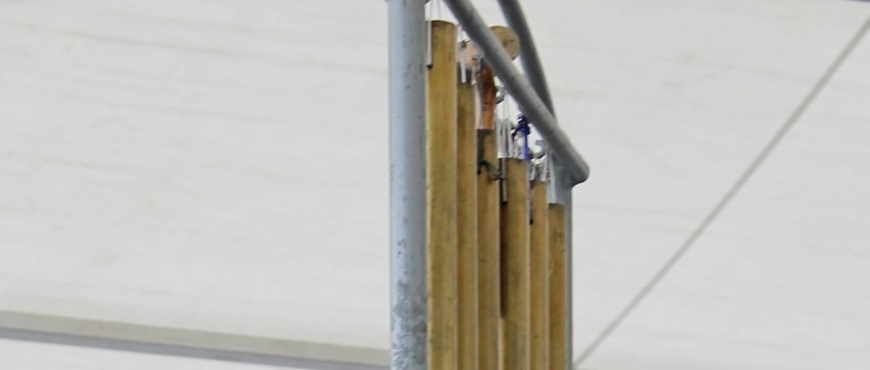
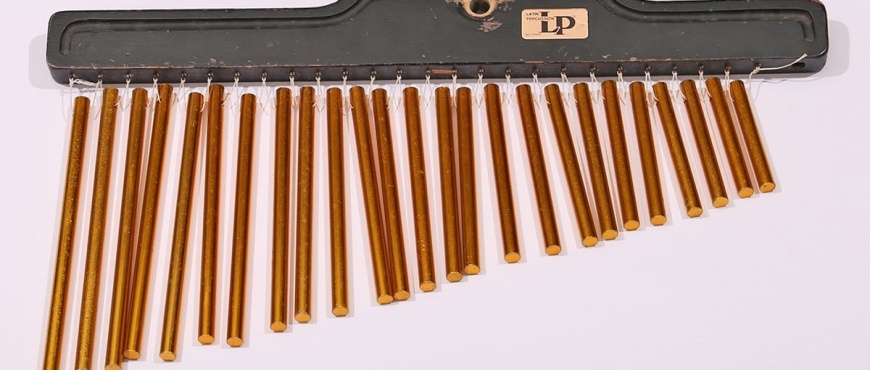
Instrument of percussion, of the category of the idiophones, composed by a set of metallic tubes of definite height. The chime is usually made of hollow tubes made of brass or steel, with a diameter of about three to seven centimeters and proportional length, fixed in vertical arrangement, in two distinct rows (as if it were a keyboard) , in an iron frame. The instrument is built on three predominant models, of different pitch: an octave and a fourth (from C3 to F4), two octaves (from F2 to F4) or three octaves (from C2 to C4). The tubes are struck…

Nowadays most of the transverse flutes are made of metal, they belong to the wood-blow instruments and until very recently they were built on this material. The transverse flute, a cylindrical tube of metal open at the end, is composed of three independent pieces that the performer must assemble each time he plays. This division facilitates the transport of the instrument, but, more importantly, it can be tuned depending on whether the head is more or less inserted in the upper part of the body. The three sections are composed of the head, which houses the mouth, the body, where…
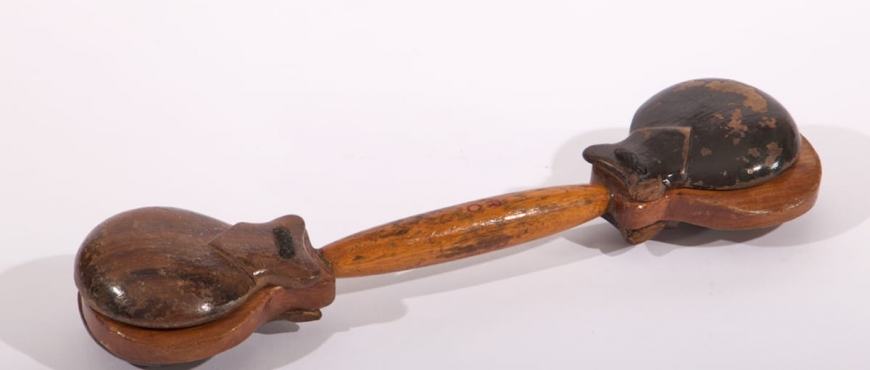
It presents the design of traditional castanets in laurel wood, with the volumetric configuration of a pear and whose shells (10 x 10 cm) were burned after excavation. The two pieces that compose it are united by means of a sisal rope. Direct percussion idiophon Portugal, Madeira – Ponta do Sol – Madeira, 20th Century Materials: laurel wood, sisal rope or thick string Owner: AMCXarabanda
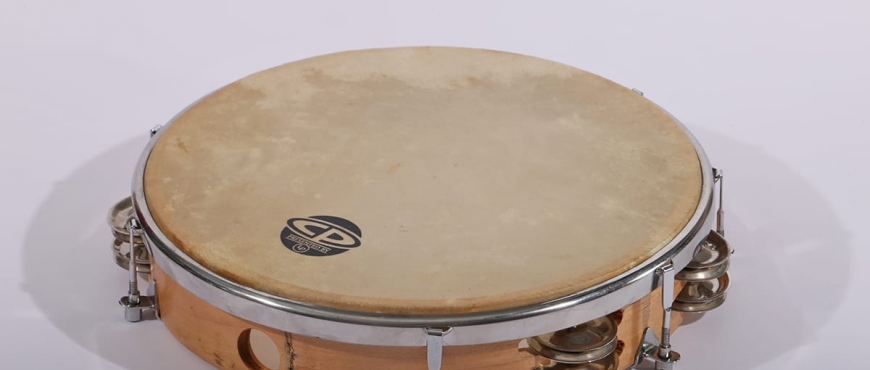
Small cylindrical drum, low and unimembranophone consisting of a pine ring, an animal skin membrane (pig’s bladder) and six metal sockets. Membranophone Portugal, Madeira – Funchal, 20th century Materials: pine, animal skin (pig bladder), metal Owner: AMCXarabanda
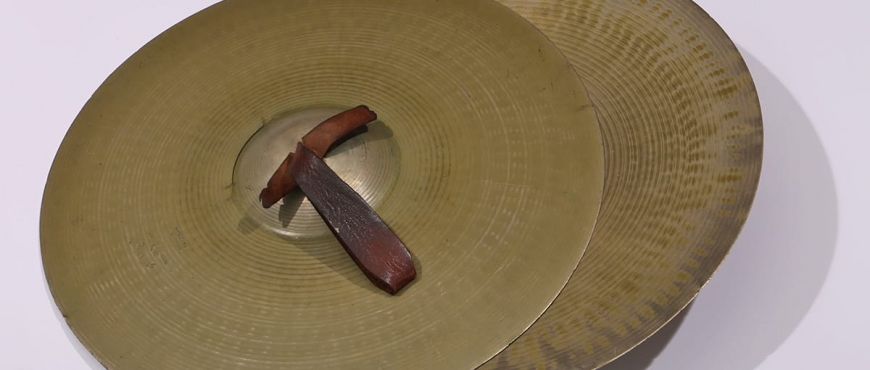
Cymbals are a percussion instrument, of indeterminate sound, classified as shock or percussion idiophone (direct), consisting of one or two concave metal disks (made of brass, tin and / or silver), of the deepest concavity in the center of the disc, with dimensions between 15 and 61 centimeters. Assured by leather strap or other material or fixed material hole in the center of the disc or suspended on a suitable tripod or in the structure on the side of the bombo, the cymbals resound by shock, by direct percussion of pot, mop, broom or brush, or by activation of a…
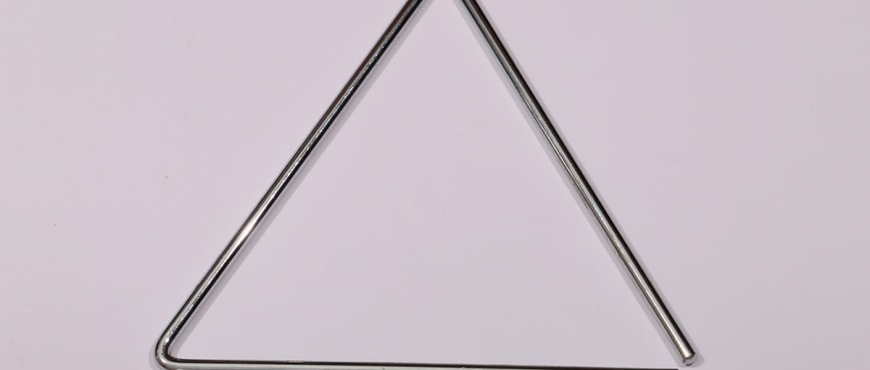
The triangle is constituted by three fundamental parts: rod that forms the triangle, the drumstick and the support where the instrument hangs. The rod, quite thin and of rounded steel, folds forming in equilateral triangle of about 30 cm of side, in case of the larger instruments. The assembly, which has an open corner for both ends to be free, is constructed in different sizes depending on the needs of the part being interpreted. The metal rod intended to strike the triangle may have a different thickness and length depending on the case. Finally, the support also varies greatly depending…
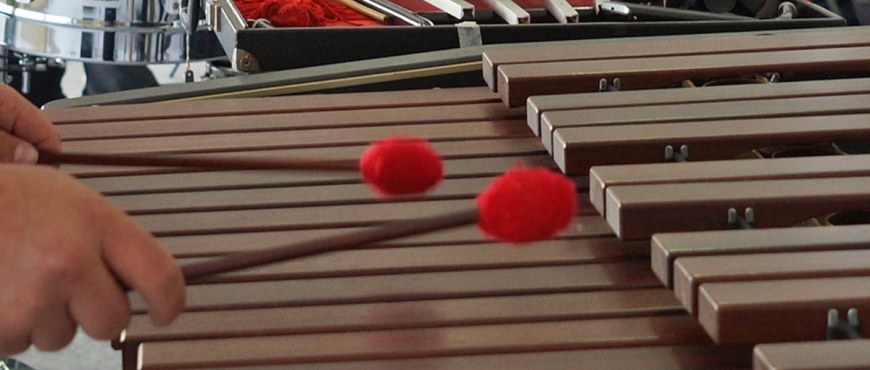
The xylophone is an idiophone, subcategory percussion plates, its determined. Identified in many cultures, from Western classical music to musical practices in Africa, Central America, South America, South and Southeast Asia and the islands, Melanesia and Polynesia, the xylophones have the following characteristics: a set of (two or more) plates, bars, stems or refined pipes, constructed of bamboo, wood or synthetic material, supported between two vibration nodes and struck with chopsticks or plates, with common resonator or with individual resonators for each plate (note ). Described, with different denominations, in the treaties of the 15th and 16th centuries, the European…
Percussion instrument of the category of idiophones, constituted by a hollow, concave tube, made of bronze or other metal, of determined loudness. Frequently asked by composers in limited scope sets, the bells are struck by an interpreter, or automatically, of predefined form, using a clock mechanism. Predecessor of instruments like carillon or tubular bells, the bell served the musical practice of early Western civilizations (Mesopotamia, Babylon, 2nd millennium BC) and (China, 5th century BC). Since at least the 5th century BC is documented the fixing of several bells on a frieze, struck with one or two small hammer (s) by…
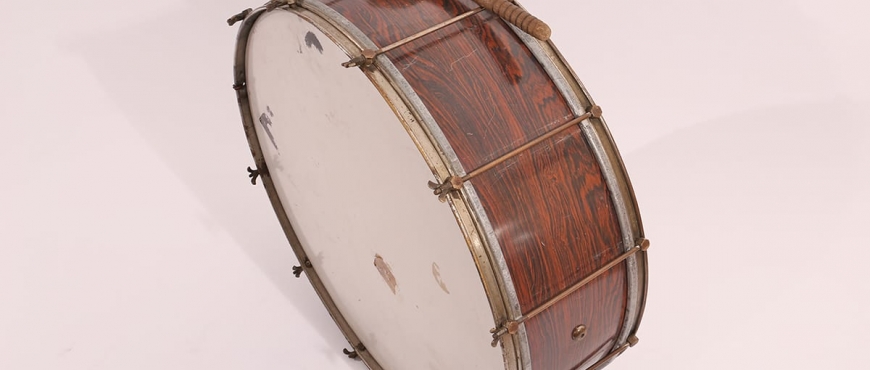
The bass drum is a percussion instrument, from the category of membranophones, directly impacted, sub-category bi-membranophone, with resonator with morphology of tube, of cylindrical type: the sound, of indefinite height, result of the percussion and the vibration membrane (s) stretched in the resonator. The instrument, large (90 to 100 centimeters in diameter), is composed of two cutaneous membranes or synthetic material (polyester, plastic), fixed on both sides of a cylindrical frame made of wood or metal (with holes) by metal rings whose tension is adjusted by hooks, washers and / or tensioning screws; (Previous methods of tensioning the membrane, with…

Wind instrument of the family of woods, the English horn, refined in F, a fifth below the oboe, is a double reed and conical bore aerophone, constructed of two blades of reed, fixed by a long tudel, folded at an angle of sixty degrees, with a narrow conical rectilinear body (about 100 cm), currently constructed in three sections, coupled by hole and springs: body – with sixteen to twenty holes, eight covered by the fingers and the other activated by mechanism of metal keys – divided into upper junction (for the left hand) and lower junction (for the right hand)…
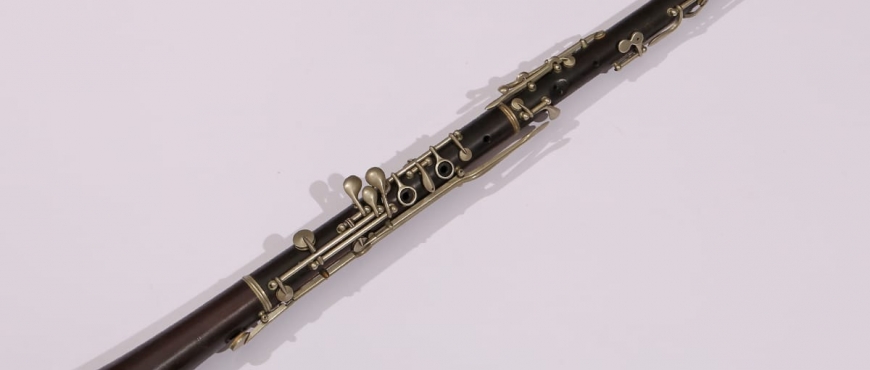
Wind instrument of the family of woods, the oboe is a double reed aerophone, with narrow conical body (open tube about 60 cm), with sixteen to 20 holes, six of which are pressed by the fingers of the interpreter and the others activated by a complex mechanism of keys. The oboe is currently constructed in black cock, ebonite or plastic in three parts, joined by hole and springs: upper body and lower body, with six holes and mechanism of metal keys and campanula, slightly pronounced. Generally made by instrumentalists, the Heteroglot Reed is made up of two blades of cane…

Vane instrument with cylindrical body. Made up of a single piece in metal, which ends in bell. It has 23 holes and 22 keys, 6 of them open (in natural notes). Only one of the holes has no key. Strapped cordophone Germany, Markneukirchen, post. 1926 Recording in the Bell: Gebruder Monnig / Markneukirchen Instrument Number: 30691 Materials: metal Owner: Private Collection Carlos Jorge System: 23 keys
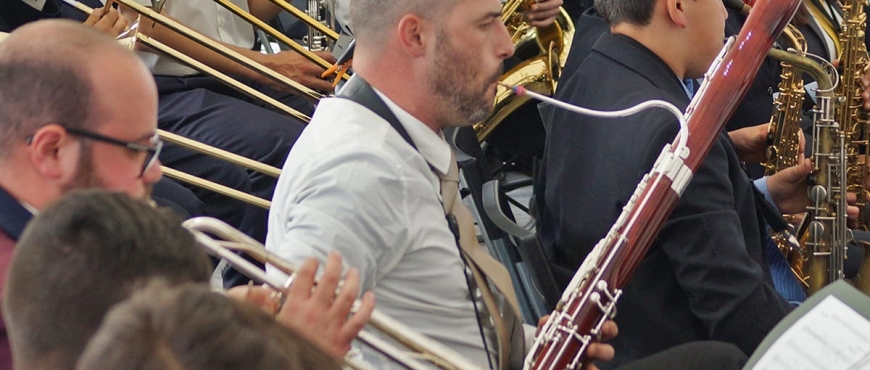
Aerophones of the oboe, wood family and tenor and bass types, the bassoon and contrabassoon are wind instruments of double reed heteroglotte fixed by metal tudel and curved conical body, maple or other hardwood, in four components: tenor joint (or small branch), low joint (or large branch), breech and bell (or pavilion). The wide and long cane reed is fixed by a small receptacle at the lower end of a hook-shaped tudel, in turn inserted into the upper end of the tenor joint. A semicircular metal junction at the bottom of the bolt joins the base of the tenor and…
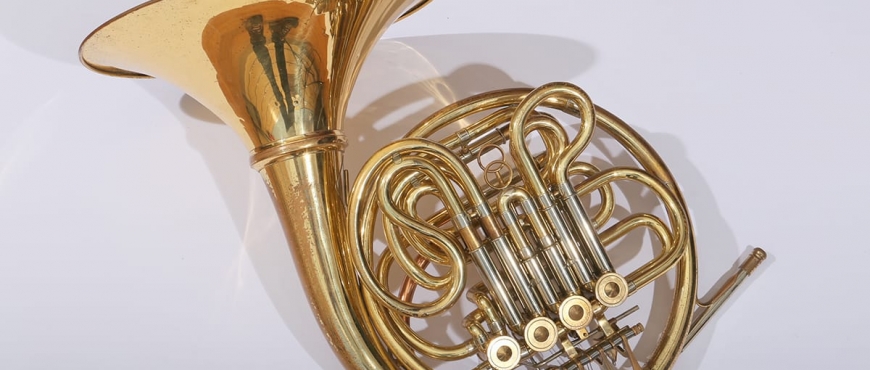
The french horn is an aerophone of the metal family, used in symphonic orchestras, philharmonic band and small groups as in Brass quintets. The french horn is a unique instrument among the members of the orchestra because the cylinders are operated with the left hand and because it is played with the bell to the back of the orchestra. Considered the most expressive of blow-metal section instruments, the horn is perhaps the most difficult to play. Its appearance is that of a metal tube of conical section rolled on itself. Narrow in the part of the mouthpiece, the tube widens…
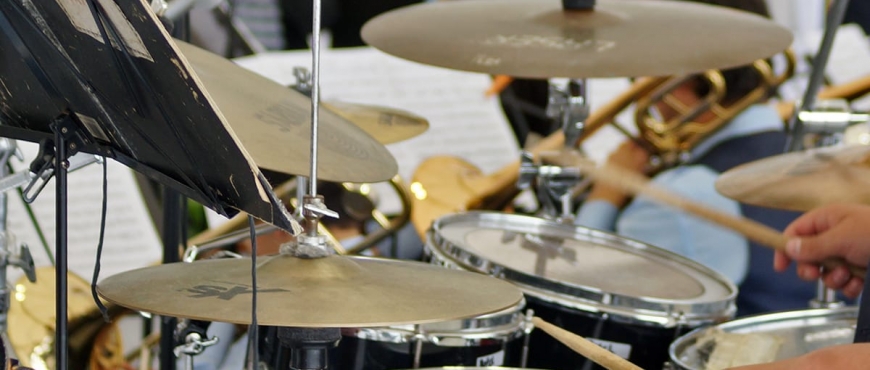
Percussion instrument for the realization of complex rhythmic accompaniment patterns, characteristic of jazz combos, groupings of modern rhythms and pop music groups. The emergence of the instrument results from the invention, at the end of the nineteenth century, of several types of pedals for playing percussion instruments and other soundproofing equipment in theaters and its consequent adoption for the execution of the bombo and cymbals suspended at the same time as the practice of other percussion instruments with the hands. The battery is, therefore, constituted by bombo, snare drum and suspended cymbals, to which are added, according to the taste…